At Mars Veterinary Health, we believe our Purpose: A BETTER WORLD FOR PETS starts with the people who care for them. We take a holistic approach to supporting our Associates’ health and wellbeing, with emphasis on promoting a safe and supportive culture and reducing the mental health challenges inherently faced by veterinary professionals. We offer an array of mental health benefits and resources, including one of the most extensive social work programs in the veterinary industry.
In this Q&A, Lisa Stewart-Brown, LCSW, MBA, who leads our mental health & wellbeing programs, shares more on the essential role of veterinary social workers.
Why is veterinary social work important?
Mental health impacts everyone globally—but is particularly felt by those in helping professions. As one of those helping professionals, veterinary professionals disproportionately struggle with mental health challenges given the inherently caring nature of their work. Additionally, veterinary professionals are very knowledgeable in clinical pet care topics but not as knowledgeable in ‘human care’. Our social workers are helping expand their knowledge about the human side of their work.
Tell me more about the mental health challenges uniquely faced by veterinary professionals.
Most veterinary professionals have dreamed of helping animals since childhood, which makes the challenges they face profoundly personal. Not only do veterinary professionals care for pets, but they also must meet the needs of the people in their lives.
Many people assume veterinary professionals spend their days snuggling puppies and kittens. And while that’s partially true, and there are many rewarding aspects of veterinary careers, they also come with intense highs and lows stemming from multiple factors:
- High demand and burnout. Veterinary professionals experience fast-paced, unpredictable workloads, juggling various responsibilities and appointments. These realities of the job are complicated by high demand for veterinary care, paired with workforce shortages in many regions.
- Dilemmas and distress. As pet lovers first and foremost, veterinary professionals face a unique set of stressors – they’ve dedicated their lives to caring for animals but deal with intense emotional situations daily, along with clients who sometimes struggle to balance their pets’ needs with financial realities.
- Compassion fatigue. In addition to exposure to pet illness, veterinary professionals deliver bad news to clients and offer emotional support to distraught pet owners. Repeated exposure to these emotionally intense situations and suffering can take a toll on mental health and make work/life balance challenging to achieve.
What is Mars Veterinary Health doing to address veterinary mental health challenges?
While these universal issues are affecting all veterinary workers, Mars Veterinary Health has been unique in addressing them. As we’ve invested in mental health strategies, resources, and programs for our Associates, clients, and the broader veterinary profession, it’s become evident how this work impacts the people who provide care to pets. That’s why we believe caring for our people infuses our care for patients and clients. Caring for our people is just another way we care for the future of veterinary medicine.
Across Mars Veterinary Health—and the veterinary profession—we continue to work to help reduce stigmas related to self-care and help-seeking behavior and create a workplace culture where our Associates feel empowered, safe, and supported. There is always more work to do, but we’re making progress.
Why does Mars Veterinary Health employ veterinary social workers?
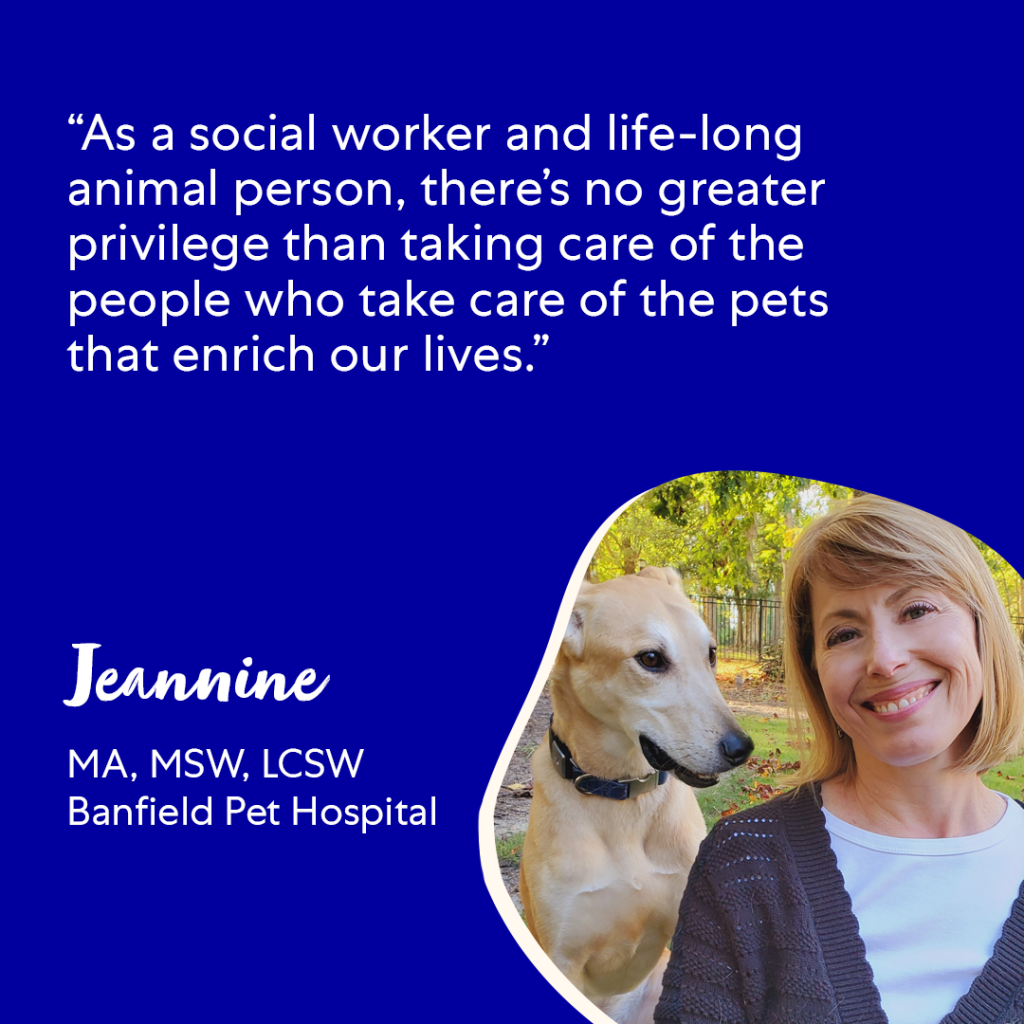
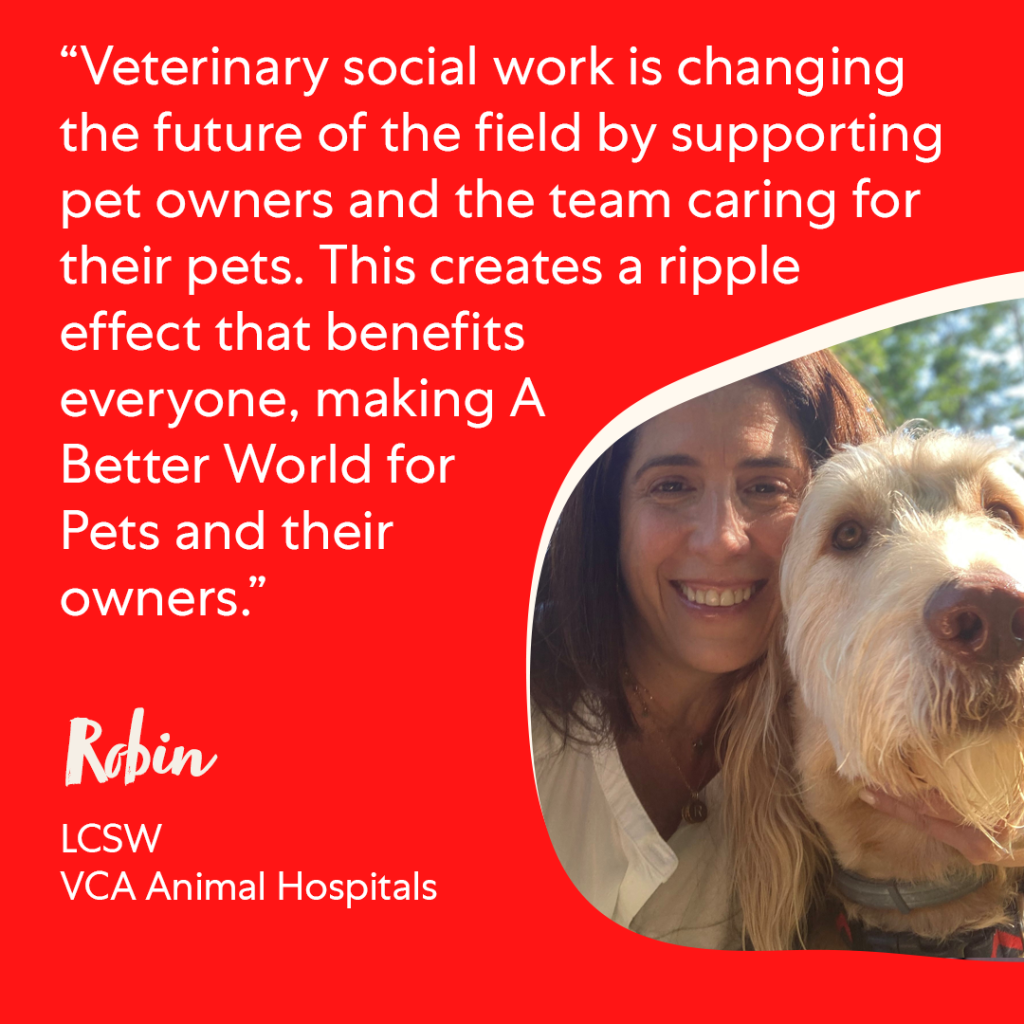
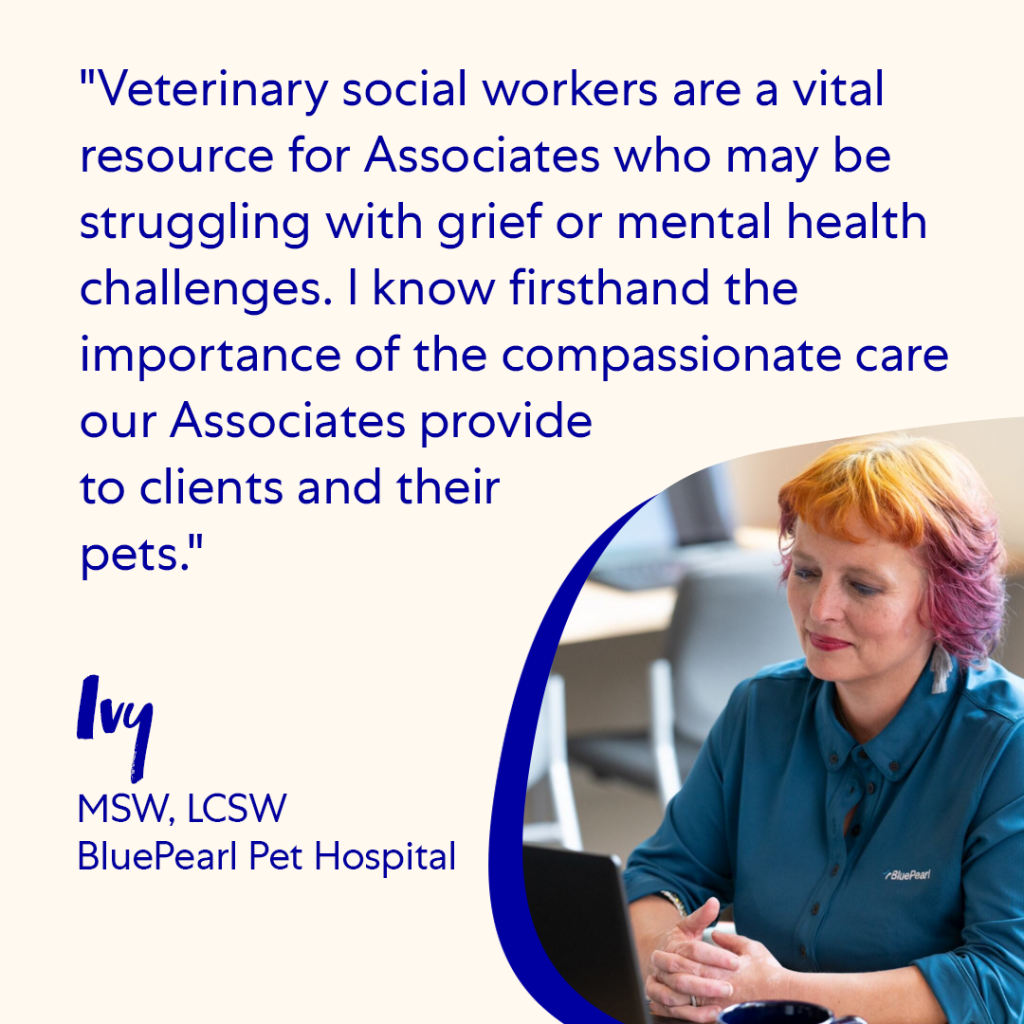
Mars Veterinary Health is making investments supporting all aspects of Associates’ health and wellbeing, and in addition to various other benefits and resources, that includes a growing network of 20+ in-house licensed veterinary social workers supporting Associates and clients across our more than 2,200 Banfield, BluePearl, and VCA hospitals.
With one of the most extensive social work programs in the veterinary industry, our social workers help reduce the emotional burden of the hospital team, assisting Associates with stress management, mental health awareness, coping tools, compassion fatigue, burnout, communication, and conflict management – and in some cases, support our clients as well.
For example, BluePearl social workers in several regions across the country are available to travel, while others are located in hospitals to provide direct support for Associates and pet owners. BluePearl also has 100+ Wellness Ambassadors who help integrate the social workers program within their hospitals. VCA social workers support both Associates and clients in the major regions of the United States, and Banfield social workers support the practice’s holistic approach to Associate health and wellbeing as well as providing on-the-ground support as needed for its 1,000+ hospital locations.
Many veterinary professionals have learned to compartmentalize their feelings because they have a job to do, and there is another patient waiting for high-quality care. Their job doesn’t end with a single loss—they often shove their emotions aside to keep moving. But those emotions are like a boomerang – they come back. With the involvement of social workers, our veterinary teams are better able to resolve feelings, so the ongoing sense of burden doesn’t build so much over time. Our goal is to help people cope with day-to-day stressors.
Who do Mars Veterinary Health social workers support?
Our internal network of licensed clinical social workers serve:
- Associates: Our social workers—along with wellness ambassadors, mental health first-aiders, and line managers—provide education and support to recognize signs of emotional strain and distress in themselves and their fellow team members. We equip them to initiate conversations about mental health and wellbeing and how to connect the Associate to appropriate resources or benefits. This personalized approach is intended to help ensure each Associate feels valued and cared for, contributing to their overall wellbeing.
- Leaders: Our social workers train leaders across our business on mental health literacy and the importance of supporting Associate wellbeing and belonging, emphasizing the importance of self-care and help-seeking behaviors. Veterinary-specific Mental Health Literacy curriculum has been added as an onboarding requirement for leaders in one of our U.S. practices.
- Clients: Our social workers are embedded in some of our largest veterinary hospitals to provide invaluable support to pet owners during critical times for their beloved pets. They assist with critical conversations, transferring some of the emotional burden from our hospital medical teams to the clinical social worker, ensuring the wellbeing of both pets and their owners.
- Industry leaders & mental health organizations: We also work at the macro level with industry organizations/leaders, academic institutions/universities, and mental health organizations like the American Foundation for Suicide Prevention to shape mental health policies, practices, and resources—all in the name of making the veterinary profession a place where people can picture fulfilling, lifelong careers. This collaborative effort supports a larger movement, contributing to the overall wellbeing of the veterinary profession. For example, our “ASK: Assess, Support, Know” training was designed to help veterinary professionals recognize and address emotional distress in themselves and others. To learn more and take the free course, visit ASKAssessSupportKnow.com.
What are your hopes for the future of veterinary social work?
I’m optimistic that the field of veterinary social work will continue to grow because it is proving successful in destigmatizing mental health topics and fostering a greater understanding of the unique challenges faced by veterinary professionals. There is a growing willingness across the profession to have open conversations, promote early intervention, and ensure people receive the care they need, without fear of judgment. I hope that by raising awareness and working together, we can continue to make a significant and positive impact on people, the profession, and pets.